
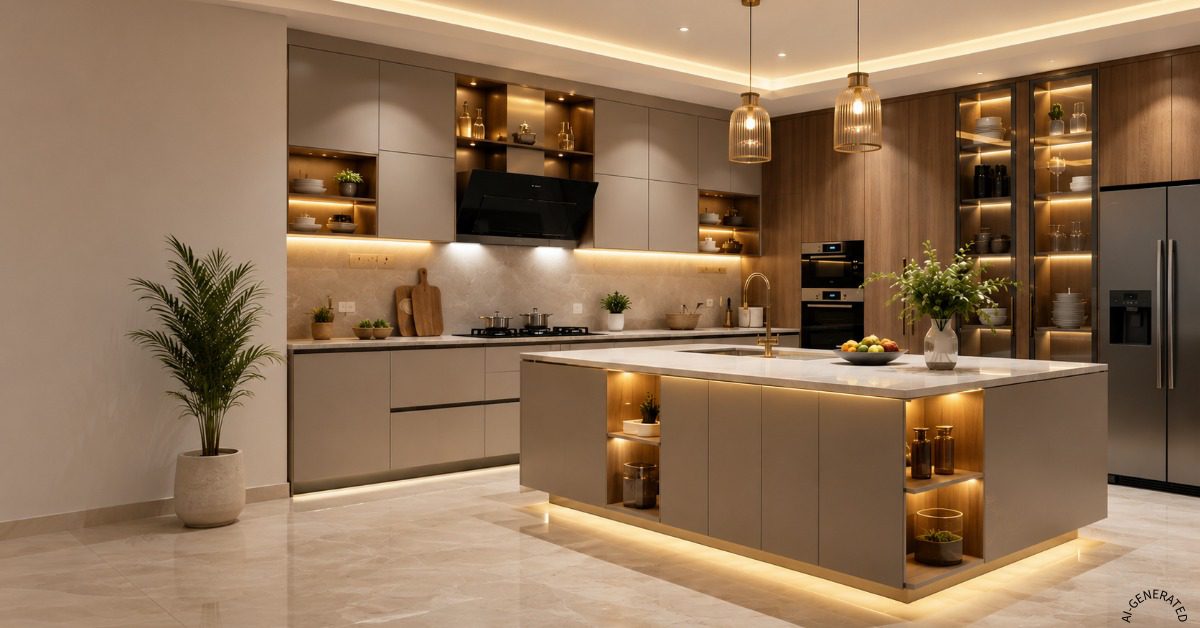
Modular Kitchen Designs: Trends, Ideas & Inspiration for Your Jaipur Home
The kitchen is no longer just a functional space — it’s often the heart of the home, where families gather, cook, and unwind. As homes in Jaipur move toward more modern layouts, modular kitchen designs have become the go-to choice for homeowners who want a space that’s stylish, efficient, and tailored to how they actually live.
In this guide, we explore the latest modular kitchen design trends, layout ideas, and tips to help you plan a kitchen that works beautifully for years to come.
What Makes a Kitchen “Modular”?
A modular kitchen is built using pre-designed, factory-made units (cabinets, drawers, shelves, and countertops) that are assembled on-site to fit your space. Unlike traditional brick-and-mortar kitchens, modular designs offer:
- Customization — units can be mixed, matched, and resized to fit any kitchen shape.
- Smart storage — every corner, including awkward spaces, is designed for maximum utility.
- Easy maintenance — materials are chosen for durability and easy cleaning.
- Faster execution — pre-fabricated units mean quicker installation compared to civil work.
Popular Modular Kitchen Layouts
1. L-Shaped Kitchen
One of the most popular layouts for mid-sized homes. It makes efficient use of two adjoining walls, creating a natural workflow between the sink, stove, and storage — often referred to as the “kitchen work triangle.”
2. Parallel (Galley) Kitchen
Ideal for narrow spaces, with counters and storage running along two parallel walls. This layout maximizes counter space and works well for homes where the kitchen is a dedicated, closed-off area.
3. U-Shaped Kitchen
Perfect for larger homes or open-plan layouts. Storage and counter space wrap around three walls, offering ample room for multiple people to work in the kitchen at once.
4. Island Kitchen
A growing trend in modern Jaipur homes — a central island adds extra counter space, can double as a breakfast bar, and creates a social hub within the kitchen.
Modular Kitchen Design Trends for 2026
Handle-less Cabinets
Sleek, minimalist cabinet fronts with push-to-open or recessed grip mechanisms create a clean, clutter-free look that’s become a hallmark of modern kitchen design.
Two-Tone Color Schemes
Pairing contrasting cabinet colors — like a darker base with lighter overhead units, or matte finishes paired with wood tones — adds depth and visual interest without overwhelming the space.
Smart Storage Solutions
Pull-out pantry units, corner carousel units, built-in bins for waste segregation, and vertical dividers for trays and chopping boards are now standard features in well-planned modular kitchens.
Open Shelving Accents
While full cabinetry remains practical, many designs now incorporate a few open shelves for display — for plants, crockery, or decorative items — adding warmth to an otherwise streamlined space.
Durable, Low-Maintenance Materials
Quartz and granite countertops, PVC or acrylic shutters, and anti-fingerprint laminate finishes are popular choices for Jaipur’s climate, balancing aesthetics with everyday durability.
Integrated Appliances
Built-in hobs, chimneys, microwaves, and dishwashers that blend seamlessly into cabinetry give kitchens a more streamlined, high-end appearance.
Planning Your Modular Kitchen: Things to Consider
- Ventilation and natural light — important for Jaipur’s climate, both for comfort and to manage cooking odors and heat.
- Workflow — plan the placement of the sink, stove, and refrigerator to minimize unnecessary movement.
- Storage needs — think about your cooking habits, the number of appliances you own, and how much pantry storage you’ll realistically need.
- Budget and material choices — there’s a wide range of finishes and materials available, so it helps to define your budget early and prioritize where quality matters most (countertops and hardware tend to see the most daily wear).
Bringing It All Together
A well-designed modular kitchen isn’t just about aesthetics — it’s about creating a space that fits seamlessly into your daily routine. The right layout, storage planning, and material choices can transform even a compact kitchen into one that feels open, organized, and enjoyable to cook in.
If you’re planning a new home or considering a kitchen renovation, thinking through these elements early on — alongside the rest of your interior design — helps ensure everything comes together cohesively.
Planning a kitchen or full home interior makeover? Explore our interior design services and see how thoughtful planning can transform your space. View Interior Design Services →
Frequently Asked Questions
Q1: What is the ideal kitchen layout for a small home?
For compact spaces, L-shaped or parallel (galley) layouts work best, as they make efficient use of limited wall space while keeping the kitchen functional.
Q2: Are modular kitchens more expensive than traditional kitchens?
Costs vary based on materials, finishes, and the level of customization. While modular kitchens can have a higher upfront cost than basic civil-work kitchens, they often offer better long-term durability and significantly more organized storage.
Q3: How much storage space should a modular kitchen have?
This depends on household size and cooking habits, but a good modular design typically includes a mix of base cabinets, wall units, tall units for pantry storage, and dedicated solutions for appliances and utensils.
Q4: Can a modular kitchen be customized for an existing kitchen space?
Yes — modular units can be designed and configured to fit almost any existing layout, including irregular shapes, as long as plumbing and electrical points are planned accordingly.