
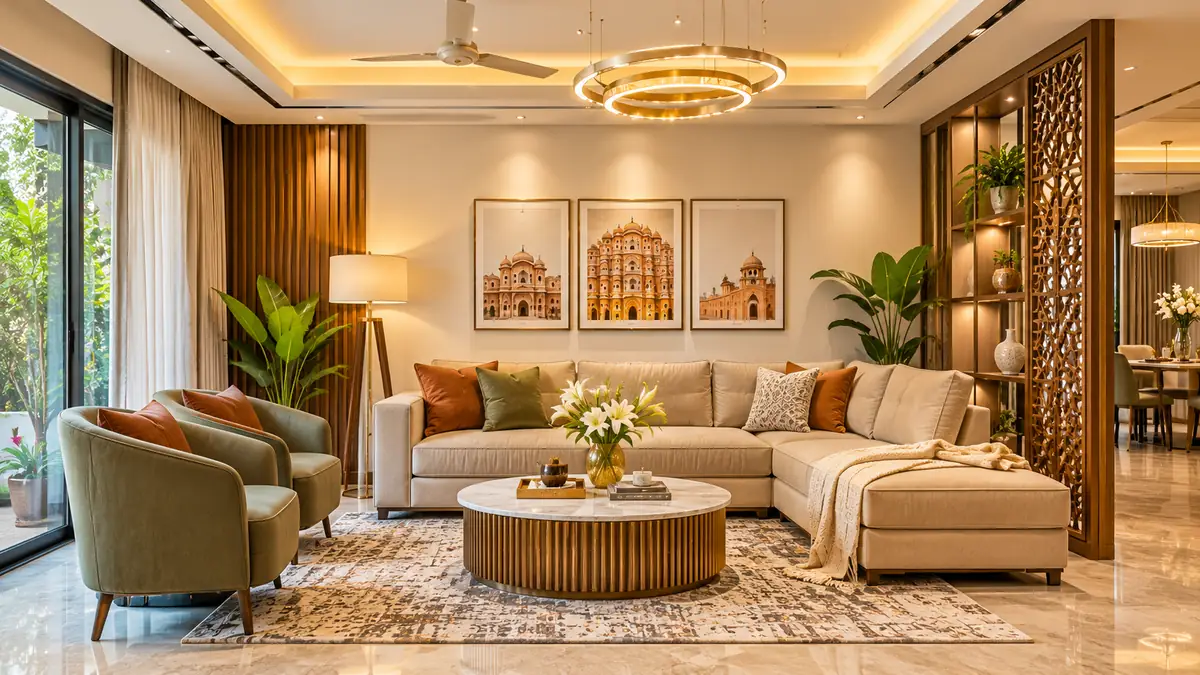
Good interior decorating starts with one clear idea for each room, a few well-chosen statement pieces, layered textures and enough empty space to breathe. You do not need to buy more things; you need to place the right things well.
Decorating is where a house starts to feel like a home. Once the walls, floors and furniture are in place, it is the small choices that make a room feel warm, personal and finished: the rug, the curtains, the art, the plants and the way you arrange them.
This guide shares practical interior design and decorating ideas, room by room, with a focus on Indian homes. If you want the design principles behind a good layout, read our guide to modern interior design principles first.
1. Living Room Decorating Ideas
The living room is the face of your home, so it should feel welcoming and look good from the entrance.
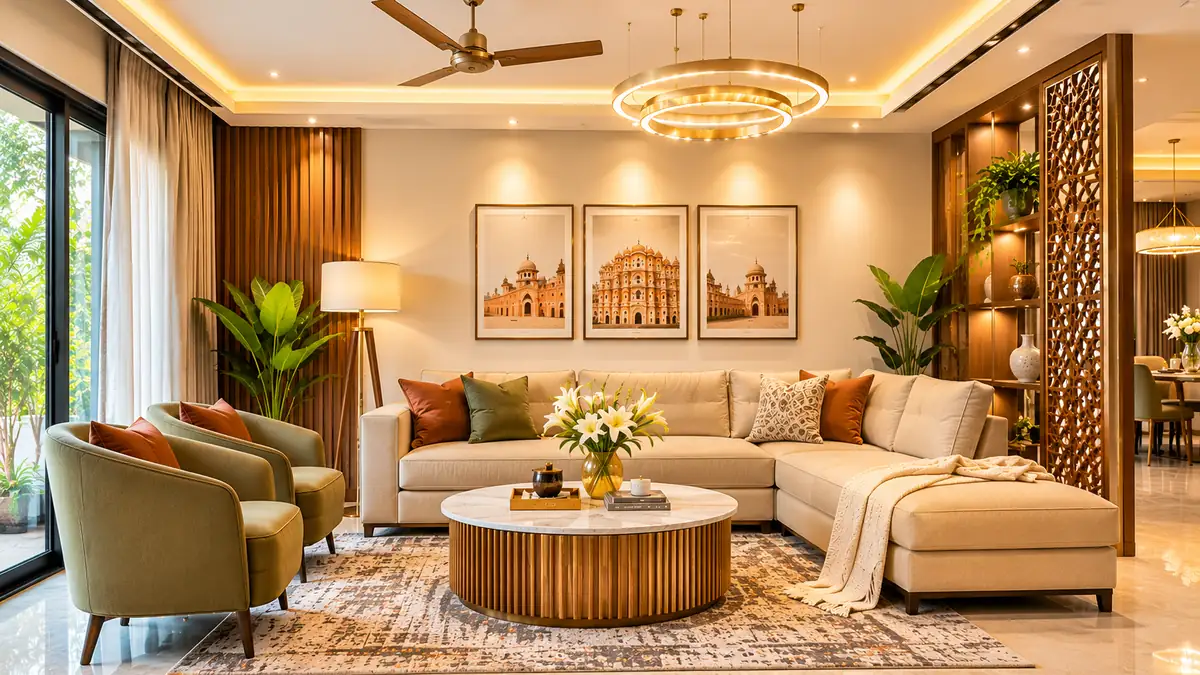
- Anchor the seating with a rug. A rug large enough for the front legs of the sofa and chairs pulls the area together.
- Choose one statement piece. A bold sofa, a carved wooden console or a large piece of art is enough; let the rest support it.
- Layer your wall decor. Combine one large artwork with a few smaller frames or a mirror instead of covering the whole wall.
- Use a coffee table styled in threes. A tray, a plant or a vase and a book or two look neat without feeling crowded.
- Add texture. Cushions in different fabrics, a woven basket and a throw bring warmth to a simple sofa.
2. Bedroom Decorating Ideas
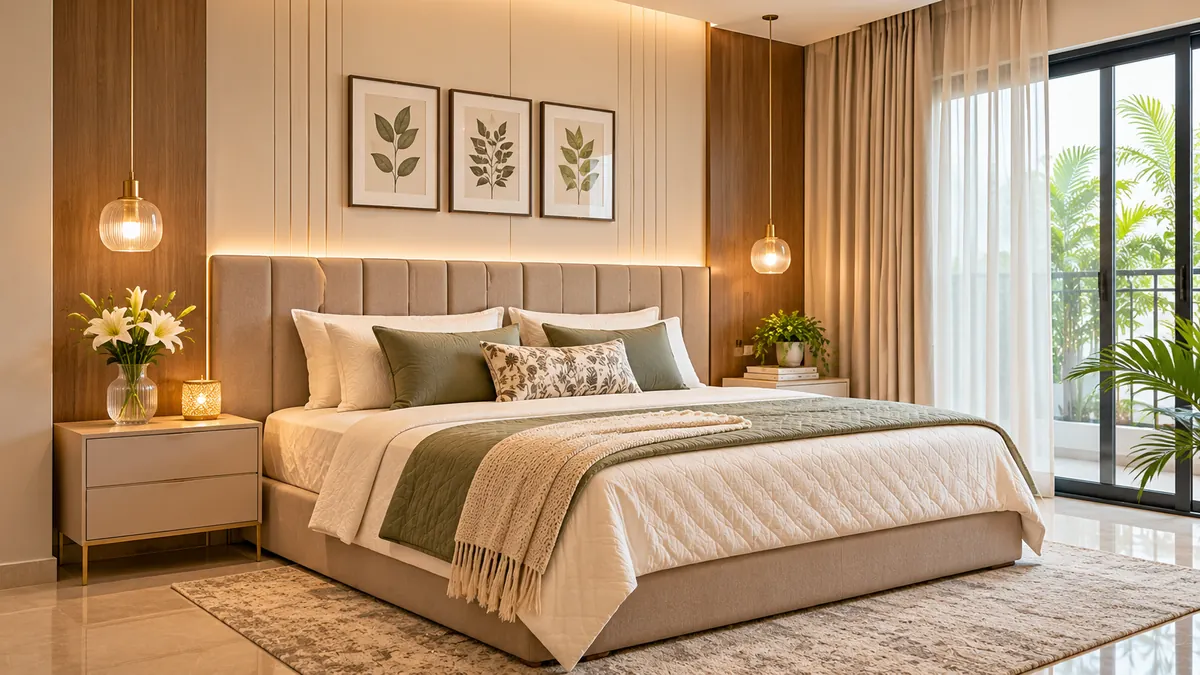
A bedroom should feel calm. Keep the decor soft and uncluttered.
- Make the bed the focus. A good headboard, layered bedsheets and two or three pillows are often all you need.
- Pick soft, restful colours such as warm whites, light neutrals or muted greens.
- Use blackout curtains with a sheer layer so you control light and privacy.
- Keep surfaces clear. A lamp, a small plant and a book on each side table are enough.
- Add a reading corner if there is space: a chair, a floor lamp and a small shelf.
If you are planning a full bedroom update, see our bedroom renovation service.
3. Kitchen and Dining Decorating Ideas
- Keep counters clear and store daily items in closed cabinets.
- Add one decorative element, such as handmade ceramic jars, a herb planter or a framed print.
- Style the dining table simply: a runner, a bowl of fruit or a vase with fresh flowers.
- Pick lighting above the table that suits its size and feels warm in the evening.
- Use open shelves sparingly for items you love and use often.
4. Entrance and Foyer Ideas
The entrance sets the tone for the whole house.
- Add a console or a small bench where keys, bags and shoes have a place.
- Hang a mirror to make the space feel larger and brighter.
- Choose a statement light or wall art that welcomes guests.
- Keep a closed shoe cabinet to avoid clutter at the door.
- Use a name plate and a welcoming door mat to complete the look from outside.
5. Pooja Corner and Prayer Space Ideas
- Use a simple wall unit or niche in a clean, light material.
- Add soft, warm lighting such as a small spotlight or a diya-style lamp.
- Keep storage closed for items such as incense, cloth and books.
- Decorate with fresh flowers, brass accents and a small bell or a textured backdrop.
If you follow Vastu for placement, our Vastu architect page explains how we handle it in planning.
6. Kids Room Ideas
- Plan for growth. Choose a bed, desk and storage that will still work as they grow.
- Use one bold wall, such as a mural, wallpaper or a magnetic or chalk wall, instead of colouring the whole room.
- Add open storage at child height so toys and books are easy to reach and put away.
- Choose washable, soft materials for rugs, cushions and curtains.
7. Balcony and Terrace Ideas
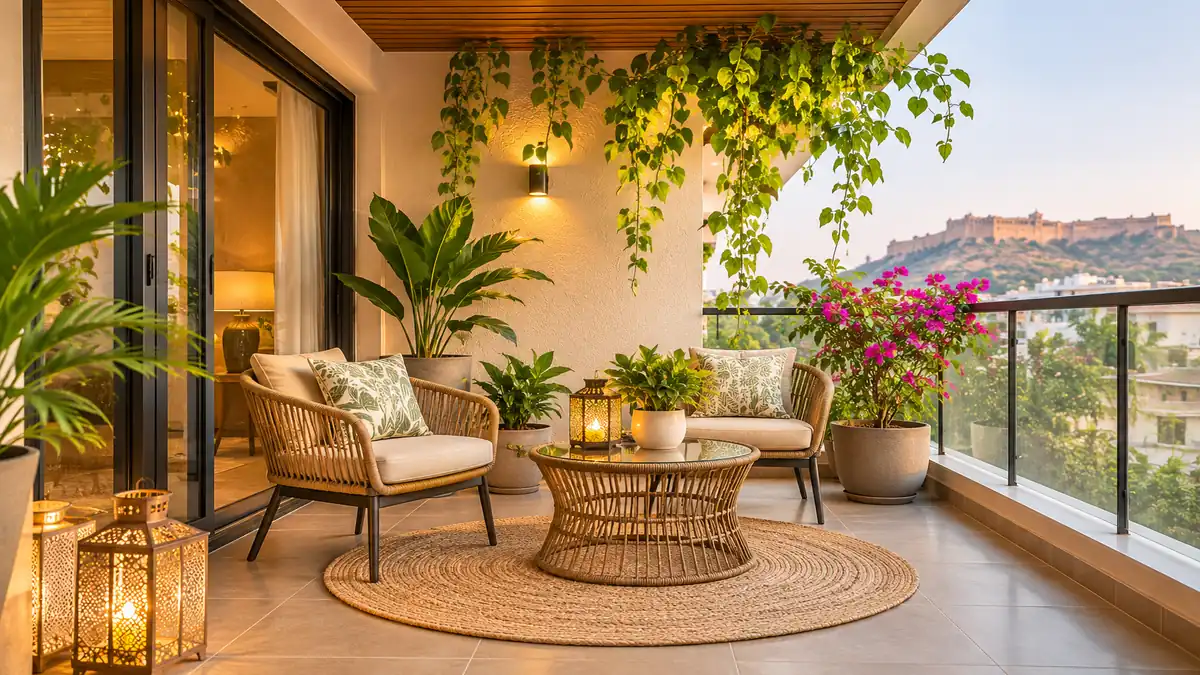
- Add a small seating corner with a bench, two chairs or floor cushions.
- Use planters of different heights for a green, layered look.
- Choose weather-resistant furniture and fabrics, since Jaipur summers and monsoons are hard on materials.
- Add lighting such as string lights or a lantern for the evening.
For larger outdoor areas, see our landscape design service.
8. Decorating With Rajasthan's Crafts
Local craft gives a home character that no catalogue can match, when used with restraint.
- Block-printed textiles for cushions, bedspreads and table runners
- Jaipur blue pottery for vases, bowls and decorative plates
- Carved wood or stone as a feature panel, jaali screen or small statue
- Handwoven rugs and dhurries to add colour and warmth
- Brass and metal accents such as lamps, trays and wall pieces
Pick one or two craft elements per room so they stand out.
9. Indoor Plants That Suit Indian Homes
Plants make a room feel alive. Easy choices for most homes include:
- Snake plant: hardy and happy with little care
- Money plant: grows well in a bottle or pot
- Aloe vera: good near a bright window
- Areca palm: adds height and a soft, leafy look
Place plants where they get suitable light, and use pots that match your colour scheme.
10. Small Space Decorating Ideas
- Choose multipurpose furniture, such as a storage bed or a nesting table.
- Use wall space for shelves, hooks and mirrors.
- Keep a lighter colour palette so the room feels larger.
- Go for fewer, larger items instead of many small ones.
- Use curtains to the ceiling to make the walls feel taller.
11. Budget-Friendly Decorating Ideas
- Repaint one wall or change the curtains to refresh a room
- Rearrange furniture before buying anything new
- Swap cushion covers, bedspreads and table linen with the season
- Frame photographs, postcards or fabric as inexpensive wall art
- Use plants, candles and a good lamp to make the room feel finished
- Buy a few good pieces rather than many cheap ones
12. Easy Seasonal and Festive Refreshes
You can change the feel of a room without redoing it. For festivals, add marigold garlands, brass lamps, a new rug or fresh cushion covers. In summer, switch to lighter, breathable fabrics. In winter, add a throw, a heavier curtain layer and warmer lighting.
Common Decorating Mistakes to Avoid
- Filling every wall and surface, which makes a room feel crowded
- Buying decor before deciding on a colour and style
- Hanging art too high; the centre should be around eye level
- Choosing rugs that are too small for the furniture
- Ignoring lighting, which can make even good decor look flat
- Mixing too many patterns and styles in one room
Decorating or Redesigning? Know the Difference
Decorating means styling a space with furniture, textiles, art and accessories. Interior design goes deeper: it plans the layout, lighting, storage, finishes and built-in elements. If you want to redesign a room or a whole home, our interior design services cover the planning from start to finish. You can see examples in our projects and gallery.
Frequently Asked Questions
How do I start decorating my home?
Start with one room. Decide the mood you want, choose a simple colour direction and add a rug, curtains, lighting and a few pieces of art or plants.
What is the difference between interior design and interior decorating?
Interior design plans the structure and function of a space, including layout, lighting and storage. Interior decorating styles it with furniture, fabrics, art and accessories.
How can I decorate a small room?
Use light colours, multipurpose furniture, wall storage and a few larger pieces instead of many small ones.
How can I decorate my home on a budget?
Refresh with new cushions, curtains, a coat of paint on one wall, plants and good lighting before buying large items.
How do I add an Indian touch to a modern home?
Use one or two craft pieces, such as block-printed textiles, blue pottery or a carved panel, and keep the rest of the room simple.
How often should I refresh my home decor?
A light refresh with cushions, curtains and accessories once or twice a year is enough for most homes.
Planning an Interior for Your Home?
If you want a professional plan for your home or office interiors, share your requirements with Kush Architects and we will explain the scope and the next steps.
| Phone / WhatsApp | +91-7689842433 |
| info@kusharchitects.com |