
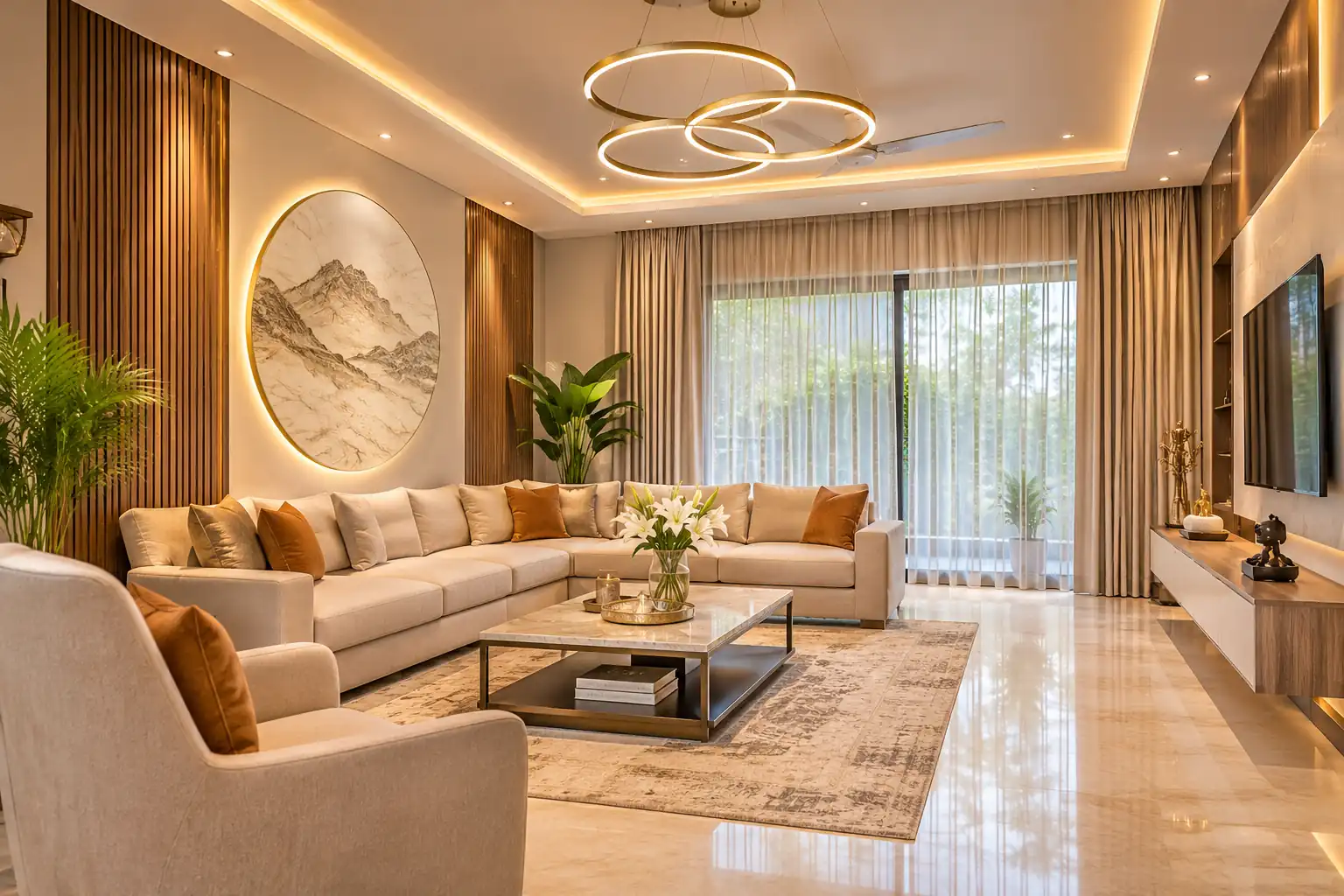
Modern interior design is not about empty rooms and cold white walls. It is about spaces that look calm, feel comfortable and work well every day. A good modern interior balances clean lines, natural light, honest materials and smart storage, so your home looks elegant without becoming hard to live in.
This guide explains the core ideas behind modern interiors, how to apply them in an Indian home, and how to avoid the mistakes that make a beautiful room impractical.
What Is Modern Interior Design?
Modern interior design focuses on simplicity, function and a clear visual order. Furniture has clean lines, colours stay controlled, and every object has a reason to be there. Decoration is chosen carefully rather than added everywhere.
It is often confused with contemporary design. Modern design follows a defined set of principles, while contemporary design keeps changing with current trends. In practice, most homes today mix both, and that is perfectly fine as long as the result feels consistent.
1. Start With Space Planning, Not Decor
The best interiors begin with the layout. Before you choose a sofa or a wall colour, decide how people will move through the room, where they will sit, and what each area is used for.
- Keep walking paths clear and at least wide enough for comfortable movement.
- Place the main seating where it faces the focal point, such as a TV unit, a feature wall or a window.
- Avoid pushing all furniture against the walls; floating a sofa or a console can define zones in an open plan.
- Plan door swings, switch positions and furniture sizes together.
This is why architecture and interiors work best when planned by one team. Our interior design services start with the floor plan, so furniture, lighting and finishes support each other from day one.
2. Use Natural Light Well
Natural light makes a room feel larger and more welcoming. Keep windows free of heavy clutter, choose light, layered curtains such as a sheer with a blackout lining, and use mirrors or glossy surfaces only where they reflect something pleasant.
In Jaipur's hot, dry climate, control matters as much as quantity. Use shading, good curtains and window placement that brings in daylight without direct harsh heat. Cross ventilation also keeps interiors comfortable.
3. Choose a Simple Colour Palette
Modern interiors usually rely on a calm base of white, beige, grey, cream or soft earthy shades, with one or two accent colours.
- Use 60% of a neutral base on walls and large surfaces.
- Use 30% of a secondary colour on furniture and soft furnishings.
- Use 10% of an accent colour on cushions, art or a single feature wall.
If you like warmth, add wood tones, brass, terracotta or muted greens. A simple palette also makes it easier to change cushions, curtains or decor later without redoing the whole room.
[IMAGE 2: A neutral bedroom or living room showing a base, secondary and accent colour. Alt text: Neutral colour palette with one accent colour in a modern Indian home interior]
4. Layer Your Lighting
One ceiling light is rarely enough. Good interiors use three layers.
- Ambient lighting: overall light from ceiling lights, cove lighting or panels.
- Task lighting: focused light for reading, cooking, studying or working.
- Accent lighting: wall washers, profile lights or spotlights that highlight art, textures and niches.
Choose warm white light in living rooms and bedrooms for comfort, and slightly brighter light in kitchens and work areas. Plan switches and dimmers early, because adding them after the walls are finished is expensive.
5. Pick Materials That Look Good and Last
Materials decide how an interior ages. Select finishes for how you actually live, not only for how they look in a photo.
- Flooring: vitrified tiles, marble, natural stone or wood-look options, depending on use and budget.
- Wood and laminates: check moisture resistance in kitchens, bathrooms and balconies.
- Walls: paint, textured finishes, panelling or wallpaper in selected areas, not everywhere.
- Surfaces: durable countertops and easy-to-clean finishes where there is daily use.
Mix two or three textures, such as wood, fabric and metal, to keep the room interesting without making it busy.
6. Build Storage Into the Design
A modern room looks clean because things have a place. Plan storage early.
- Wardrobes up to the ceiling to avoid dust-collecting gaps.
- Beds with storage drawers or a headboard unit.
- TV units with closed cabinets and a small open display area.
- Shoe racks, pooja units and utility storage near entrances and kitchens.
Closed storage with a few open shelves for decor gives the best balance between neat and personal.
[IMAGE 3: A built-in wardrobe or TV unit with closed storage. Alt text: Built-in storage and TV unit design in a modern home interior]
7. Choose Furniture With Scale and Comfort in Mind
Furniture should fit the room, not fight it. A very large sofa in a small living room makes the space feel crowded, while very small pieces in a large room look lost.
- Measure the room and draw furniture to scale before buying.
- Choose pieces with clean lines, slim legs or a lighter visual weight in smaller rooms.
- Test the comfort of seating and beds in person, because looks alone are not enough.
- Avoid buying a full matching set; a mix of pieces looks more personal.
8. Add Personality With Art, Plants and Textiles
Once the structure is right, add the details that make the home yours. A few well-chosen art pieces, indoor plants, rugs, curtains and cushions give warmth to a modern interior. Keep surfaces from becoming crowded; leave some empty space so the eye can rest.
If you like Rajasthani craft, a handwoven rug, a carved piece or a block-printed textile can sit well in a modern room when used sparingly.
Common Modern Interior Design Mistakes to Avoid
- Choosing furniture and colours before finalising the layout.
- Relying on a single ceiling light for the whole room.
- Using too many materials, colours or patterns in one space.
- Ignoring storage, which leads to clutter later.
- Copying a trend photo without checking if it suits your room size and light.
- Not planning electrical points, AC position and wiring before the false ceiling and woodwork.
How to Plan Your Interior Project
- Decide your needs, budget and timeline.
- Share the floor plan, room sizes and reference images with your designer.
- Finalise the layout and furniture plan first.
- Select materials, lighting and colours as a package.
- Review drawings or 3D views before execution starts.
- Confirm the scope, deliverables and payment stages in writing.
If you are also building a new house, it helps to plan the interior while the architecture is still on paper. See how our architectural design and planning and interior teams work together, or browse our completed and ongoing projects and project gallery for ideas. For a single room refresh, our bedroom renovation service may be the right place to start, and if you want your outdoor area to match, see our landscape design work.
[IMAGE 4: A project photo from the Projects page. Alt text: Elegant modern home interior by Kush Architects with layered lighting and clean furniture]
Frequently Asked Questions
What is modern interior design?
It is a design style built on clean lines, simple colour palettes, functional furniture and uncluttered spaces. The aim is a home that looks elegant and is easy to live in.
What is the difference between modern and contemporary interior design?
Modern design follows a defined set of principles such as simplicity and function. Contemporary design reflects what is current and keeps changing with trends.
Can modern interiors suit Indian homes?
Yes. Modern design works well in Indian homes when storage, ventilation, family needs and local climate are planned properly. Many homes combine modern layouts with traditional crafts and textiles.
Which colours work best for modern interiors?
Neutral shades such as white, beige, grey and cream work well as a base, with one or two accent colours added through furniture, art or soft furnishings.
Should I hire an interior designer for a small home?
Small homes often benefit the most, because space planning and built-in storage make a big difference to comfort and appearance.
When should I involve an interior designer?
As early as possible, ideally while the floor plan is being finalised, so electrical points, ceilings and furniture layouts are planned together.
Plan Your Interior With Kush Architects
If you want an interior that is elegant, practical and planned around the way you live, share your property type, location and requirements with our team. We will explain the scope and the next steps.
| Phone / WhatsApp | +91-7689842433 |
| Email: | info@kusharchitects.com |