
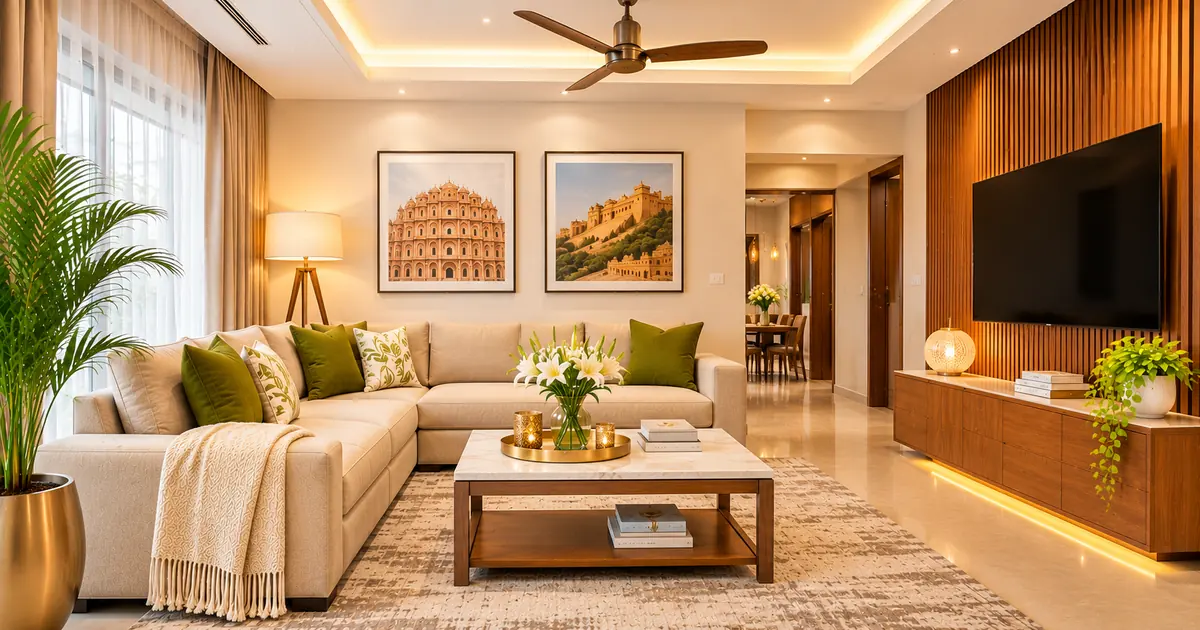
Most house decorating mistakes come from buying first and planning later. Choose one mood and a few colours, buy the big pieces before the small ones, use real materials, leave empty space, and give the entrance and the lighting as much thought as the living room.
Everyone has bought something for the house that looked great in the shop and wrong at home. The rug that was too small, the mirror that looked cheap in daylight, the showpiece that now just collects dust.
This guide lists twelve common house decorating mistakes and a simple fix for each, written for Indian homes. It will save you money, and it will save you from decorating the same room twice.
The 12 Mistakes at a Glance
| Mistake | Quick fix |
|---|---|
| 1. Buying before choosing a direction | Pick one mood and three colours first |
| 2. A cheap or tiny rug | Size it to the seating, use natural fibres |
| 3. Styling every corner | Leave some surfaces empty |
| 4. Fake luxury | Use real materials, even in small amounts |
| 5. Generic wall art | Choose pieces with a story |
| 6. Too many mirrors | Use one good mirror in the right place |
| 7. Buying matching sets | Mix, but repeat a colour or texture |
| 8. Forgetting the light | Add lamps and warm bulbs |
| 9. Ignoring the entrance | Design the first three feet of your home |
| 10. Ignoring dust and sun | Choose washable, fade-resistant pieces |
| 11. Overdoing festive decor | Refresh with flowers, lamps and cushion covers |
| 12. Buying everything at once | Add in stages, big pieces first |
Mistake 1: Buying Before You Choose a Direction
The problem: a boho cushion, a minimalist lamp and a traditional brass piece all look fine alone. Together, they look like a sale shelf.
The fix: before you buy anything, decide on one mood (calm, warm, bright, traditional) and three colours. Interior styles such as Scandinavian, Moroccan, bohemian and contemporary each have their own rules, but you do not need to follow any of them strictly. You only need a direction, so every purchase has something to match.
Mistake 2: A Cheap or Tiny Rug
The problem: a rug is the base of a room. If it is too small, it floats in the middle. If it is poor quality, it flattens quickly and makes everything on it look cheaper.
The fix: choose a size that lets at least the front legs of the sofa and chairs rest on it. Look for natural fibres such as cotton, jute or wool. A flat-woven cotton dhurrie from Rajasthan is a good, practical choice. If your budget is tight, one good rug is better than two weak ones.
Mistake 3: Styling Every Corner
The problem: when every shelf, corner and table is arranged perfectly, the house looks like a showroom. Nobody feels comfortable putting down a cup of tea.
The fix: leave some surfaces empty. Keep a bench for sitting, not for a pile of cushions. A home should look lived in, with a few places where the eye can rest.
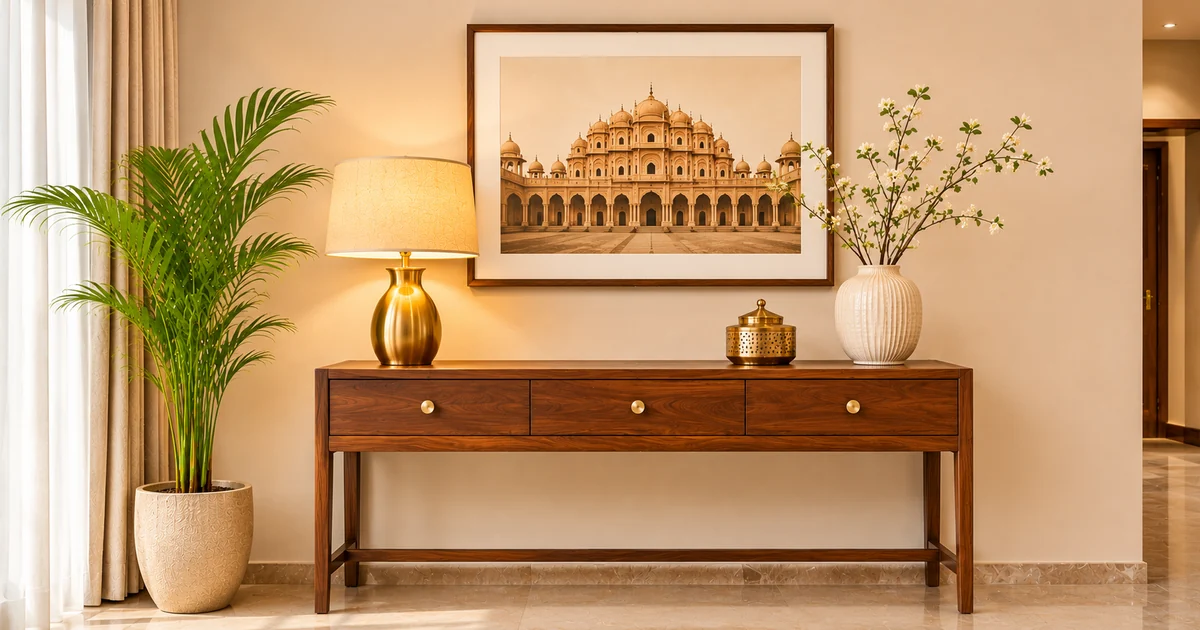
Mistake 4: Fake Luxury
The problem: plastic or resin pieces made to look like marble, crystal or expensive wood usually give themselves away in daylight. The same goes for shelves filled with fake books. They make a room feel less honest.
The fix: use real materials, even if you use only a little of them. A brass tray, a wooden bowl, a terracotta pot or a stone lamp base feels better than a lot of imitation. Real books also make a shelf warmer, so mix in a few storage boxes if you need them.
Mistake 5: Generic Wall Art
The problem: mass-produced prints bought only to fill a wall tell no story. After a few months, you stop seeing them.
The fix: choose art with a connection. Frame your own travel photos, a family photo, a block-printed textile or a piece by a local artist. Rajasthani miniature paintings and block prints are good starting points. Art does not need to be expensive, but it should mean something to you.
Mistake 6: Too Many (or Cheap-Looking) Mirrors
The problem: a wall of small mirrors with shiny, thin frames can feel cluttered and look cheap.
The fix: pick one good mirror with a solid frame and place it where it helps. A mirror in a narrow passage or opposite a window can make the space feel wider and brighter.
Mistake 7: Buying Matching Sets
The problem: ten identical vases or a perfectly matched set of everything makes a room flat and repetitive.
The fix: mix shapes, sizes and materials, and tie them together by repeating one colour, pattern or texture. For example, a blue in a cushion, a vase and a painting will link them, even though they are all different things.
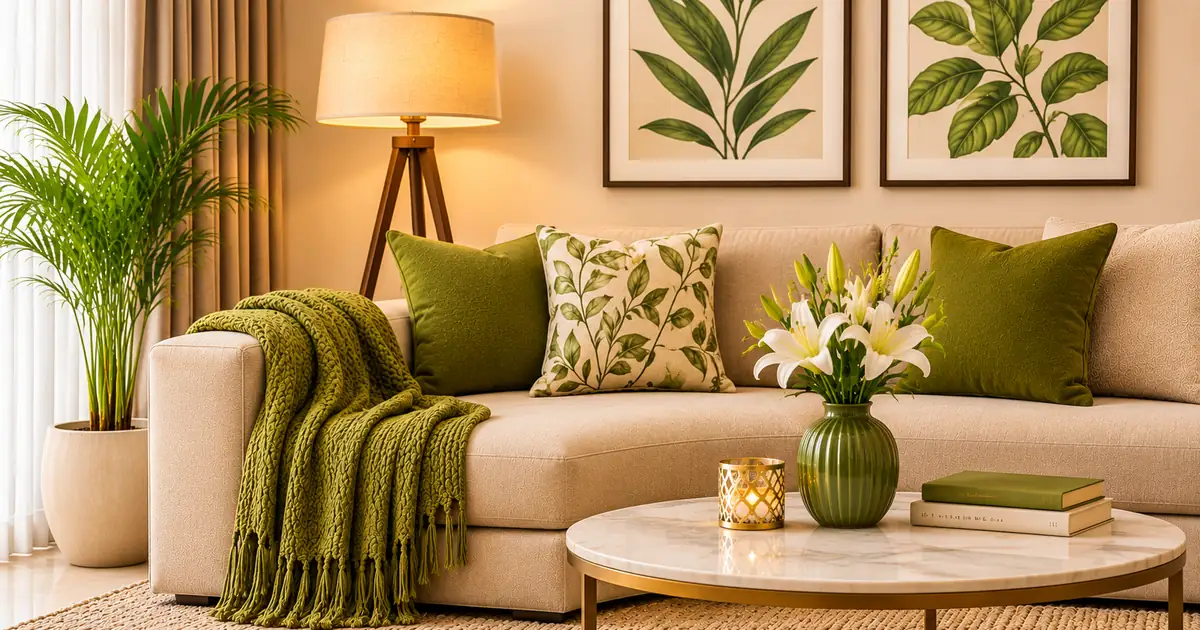
Mistake 8: Forgetting the Light
The problem: even beautiful decor looks dull under one harsh tube light or ceiling bulb.
The fix: add a table lamp or floor lamp in each main room and use warm bulbs in living areas and bedrooms. Light also decides how art, textures and plants look in the evening. For the full lighting plan, see our guide to modern interior design principles.
Mistake 9: Ignoring the Entrance
The problem: many people decorate the living room and leave the door, the foyer and the outside of the house plain. But the entrance is what visitors see first.
The fix: treat the entrance as a small, welcoming space. A well-chosen door colour, a clear name plate, a good doormat, a pair of planters or a lantern and a shoe cabinet already change the feeling. Many designers now say people want entrances with more character and personality than plain minimal ones. Add a carved detail, a brass handle or a traditional touch, as long as it suits the house.
Mistake 10: Ignoring Dust and Strong Sun
The problem: Jaipur homes deal with dust and strong sun for much of the year. Delicate, hard-to-clean items fade, collect dust and stop being used.
The fix: choose washable cushion covers, curtains that can be taken down and cleaned, and fabrics that do not fade easily near windows. Keep fragile showpieces in closed shelves. Decor that is easy to clean stays looking good.
Mistake 11: Overdoing Festive Decor
The problem: large, heavy festive decorations that stay up for months, or are packed away badly, can make the house feel tired.
The fix: keep your base decor simple, and let festivals do the change. Fresh flowers, marigold garlands, brass lamps, candles and new cushion covers are enough to create the mood. Store them neatly, so they are ready for next year.
Mistake 12: Buying Everything at Once
The problem: buying a whole room of decor in one weekend usually leads to regret, because you have not lived with the room yet.
The fix: decorate in stages. Follow this order:
- Furniture and layout
- Rug and curtains
- Lighting
- Art and a mirror
- Plants, cushions and small accents
You can always add small items later, but a wrong sofa or rug is hard to undo.
A 5-Minute Decorating Check
- Does this room have a clear mood and three main colours?
- Is the rug the right size and made of a natural fibre?
- Is there at least one empty surface?
- Is there a lamp, and are the bulbs warm?
- Is there at least one thing on the walls that means something to you?
- Is it easy to clean?
When Decorating Is Not Enough
If the room feels wrong even after you have fixed these mistakes, the problem may be the layout, the lighting plan or the storage, and not the decor. Our interior design services can help with that. For ideas room by room, read our room-by-room decorating ideas, and see how finished homes look in our projects.
Frequently Asked Questions
Where should I start when decorating a house?
Start with a mood and three colours, then buy the large pieces first: furniture, rug and curtains. Add lighting, art and small accents last.
How do I decorate a house on a small budget?
Buy fewer things, but better ones. A good rug, proper lighting and a few meaningful pieces make a bigger difference than many cheap items.
How many decor items are too many?
There is no fixed number. If you cannot use a surface or the room feels busy, you have too many. Leave some empty space.
Should all my decor match?
No. Mixed pieces look more personal. Just repeat one colour, material or pattern so they feel connected.
How do I make my house feel welcoming to guests?
Start at the entrance: a clean door, a name plate, good light and a place for shoes. Inside, use warm lighting and keep seating comfortable and uncluttered.
How often should I change my home decor?
A light refresh once or twice a year, such as cushion covers, curtains or flowers, is enough for most homes.
Planning Your Home Interiors?
If you want a plan for the whole house and not just the decor, share your requirements with Kush Architects, and we will explain the scope and next steps.
| Phone / WhatsApp | +91-7689842433 |
| info@kusharchitects.com |